
Failed dental implant treatment is not one procedure. It begins by identifying whether the problem is biological, mechanical, prosthetic, positional or related to healing. Depending on the diagnosis, treatment may range from cleaning and repairing a restoration to infection control, bone reconstruction, implant removal and staged replacement.
A loose implant, progressive bone loss, persistent infection, implant fracture or an unmaintainable full-arch bridge requires an in-person assessment. Replacement is possible in selected cases, but research indicates that an implant placed in a previously failed site can have a lower chance of survival than the original placement.
When to seek urgent local care
Do not wait to travel if you have rapidly increasing facial swelling, difficulty breathing or swallowing, uncontrolled bleeding, fever with spreading infection, severe trauma, or a sudden change in vision or sensation. Contact an emergency service or local dental or medical professional immediately.
Prompt dental assessment is also important for implant movement, pus or drainage, persistent swelling, worsening pain, a fractured bridge, exposed implant components, numbness or difficulty eating. An implant problem may progress even when pain is limited.
What can fail
- Osseointegration: the implant does not integrate or becomes mobile during healing.
- Peri-implant tissues: inflammation and progressive bone loss develop around an implant.
- Implant position: the implant is positioned in a way that compromises anatomy, hygiene, appearance, bite or prosthetic restoration.
- Components: a screw, abutment, implant body, crown or bridge loosens, wears or fractures.
- Restoration design: the bridge is difficult to clean, unstable, overloaded or unsuitable for speech, bite or facial support.
- Supporting anatomy: bone, gum or sinus conditions prevent a maintainable result.
Records to collect before requesting a review
- Implant passport, brand, model, diameter, length and component information
- Original treatment plan, consent documents, invoice and warranty terms
- Operative notes, extraction and grafting details, anaesthesia record and prescribed medicines
- Radiographs and the original CT or CBCT files, preferably including DICOM data
- Photographs and scans taken before, during and after treatment
- Laboratory records for the bridge, framework and restorative materials
- A timeline of symptoms, previous repairs, antibiotics and professional cleaning
- Relevant medical history, medicines, smoking status and recent blood-test information when requested
These records can help a clinic prepare questions, but remote review cannot confirm the diagnosis or final treatment.
Diagnostic assessment
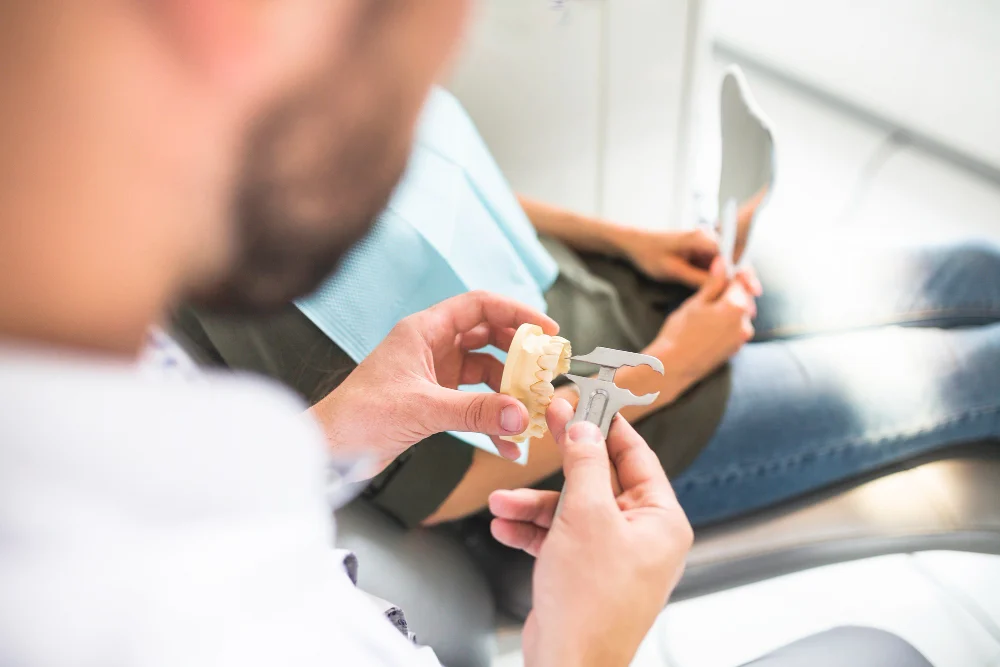
The clinician may examine implant mobility, probing findings, bleeding or suppuration, gum levels, bite, bridge fit, hygiene access and remaining teeth. Current imaging is compared with earlier records to assess bone change and implant position. CT or CBCT may be required for removal, grafting, sinus or nerve assessment, and replacement planning.
The team should identify why the original treatment failed before proposing another implant. Relevant factors can include infection, smoking, uncontrolled diabetes, history of periodontal disease, insufficient bone, poor implant position, excessive bite force, unsuitable prosthetic design and inadequate maintenance.
Possible treatment pathways
- Repair and maintenance: professional cleaning, hygiene access, bite adjustment or repair of a screw, abutment, crown or bridge may address selected mechanical or early tissue problems.
- Peri-implantitis treatment: non-surgical or surgical decontamination, correction of cleansability and supportive care may be considered. Disease can recur, and some implants ultimately require removal.
- Implant removal: a mobile, fractured, severely malpositioned or non-maintainable implant may need explantation. The technique should aim to preserve useful bone where possible.
- Site reconstruction: infection control, bone or soft-tissue grafting and a healing period may be required before replacement.
- Implant replacement: immediate replacement may be possible when infection, anatomy, stability and remaining bone permit. Delayed placement is often needed when the site requires healing or augmentation.
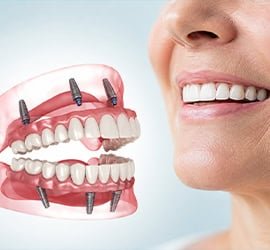
- Full-arch replanning: failed All-on-4, All-on-6 or another full-arch restoration may require removal or reuse of selected implants, new implant distribution and a new provisional and definitive prosthesis.
- Alternative rehabilitation: conventional, tilted, pterygoid or zygomatic implants, a removable prosthesis, or no further implant surgery may be discussed according to the diagnosis.
Risks and uncertainty
Revision treatment can be more complex than the original surgery because bone, soft tissue and prosthetic space may already be compromised. Risks include pain, swelling, bleeding, infection, sinus or nerve injury, gum recession, loss of additional bone, graft failure, implant failure, altered sensation and the need for further surgery. Existing components may be unavailable or incompatible.
Peri-implantitis can recur despite treatment and maintenance. A replacement implant is not guaranteed to integrate or remain healthy. Full-arch revision may involve temporary periods without a fixed bridge, changes to speech and diet, and additional laboratory or surgical stages.
Planning revision treatment in Albania
Do not book non-changeable travel until the clinic has reviewed the available records and explained that the final plan follows an in-person examination. Ask how many visits and nights may be required and whether the first visit is diagnostic only.
The written proposal should separate diagnosis, removal, infection treatment, grafting, implants, provisional restoration, definitive restoration, anaesthesia, medicines, laboratory work and follow-up. It should explain what happens if an implant cannot be removed conservatively, immediate replacement is not possible, a graft fails or an unfamiliar implant system cannot be serviced.
Clarify who provides urgent care after you return home, which reviews can be completed by a local clinician and which complications require returning to the treating clinic.
Questions for the treatment team
- What is the diagnosis, and what evidence shows why the original treatment failed?
- Which implants or components can be maintained, and which require removal?
- Can the current implant system and bridge be identified and serviced?
- What alternatives exist to removal or replacement?
- Is grafting required, and will replacement be immediate or delayed?
- Who will perform the surgical and restorative stages?
- What is provisional, what is definitive, and how many visits are expected?
- Which costs are not included, especially complication and revision care?
Verified clinic and clinician
City Dental Clinic in Tirana publishes information on implant failure, peri-implantitis treatment, implant removal in severe cases, bone regeneration and later reassessment for replacement. Its official material also describes advanced implantology and oral and maxillofacial surgery.
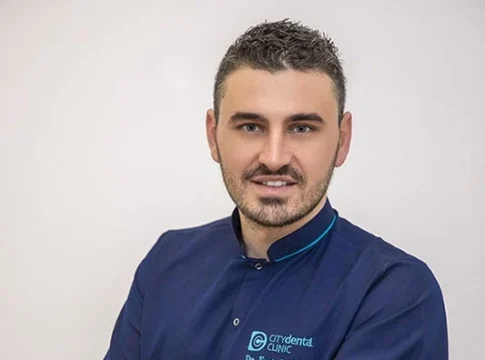
Dr. Ersted Muço is presented by the clinic as an oral and maxillofacial surgeon with training in complex atrophic-jaw implant rehabilitation. The individual proposal must still identify the clinicians responsible for diagnosis, surgery and prosthetic reconstruction.
Clinical references
- European Federation of Periodontology: prevention and treatment of peri-implant diseases
- ITI consensus: outcomes after peri-implantitis treatment and supportive care
- Gareb and colleagues: outcomes of implants placed at previously failed sites
- Roy and colleagues: systematic review of dental implant removal techniques
Clinic sources: City Dental Clinic implant failure information and City Dental Clinic peri-implantitis treatment options.
Request a treatment plan and include the available implant records and imaging. A remote review does not replace urgent local care or an in-person diagnosis.