
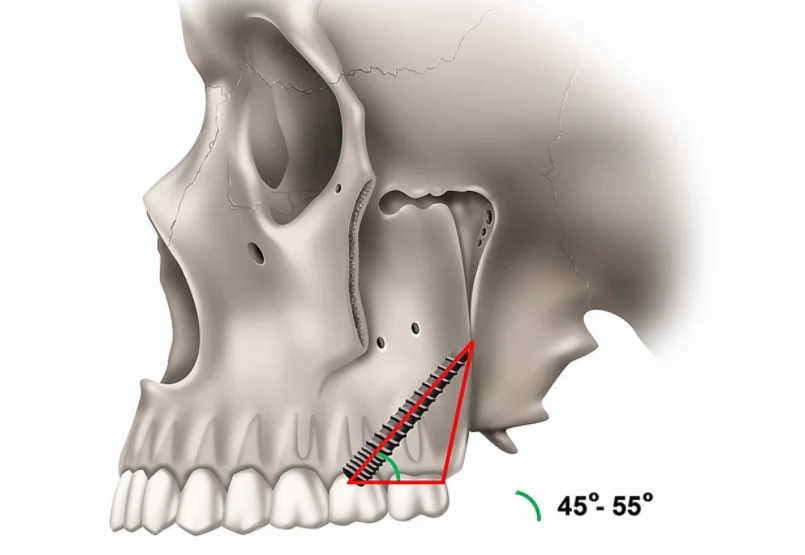
Pterygoid implants are specialised implants placed through the back of the upper jaw to engage bone in the pterygomaxillary region. They can provide posterior support for a fixed full-arch restoration when severe bone loss makes conventional implants difficult in the back of the upper jaw.
This is an advanced surgical technique. The available clinical research suggests it can be an option for selected patients, but the evidence is largely based on observational studies and must be interpreted cautiously. Diagnosis, three-dimensional planning, surgeon experience and restorative design are critical.
When pterygoid implants may be considered
They may be discussed for patients with an atrophic posterior maxilla who need posterior implant support and would otherwise require sinus augmentation, grafting, short implants, tilted implants or another reconstructive approach. They are commonly used as part of a multi-implant full-arch plan rather than as a stand-alone solution.
The choice should be based on the remaining bone, sinus anatomy, planned prosthesis, bite forces, medical health and alternatives. Pterygoid implants are not automatically preferable to sinus lifting, grafting, conventional implants, zygomatic implants or a removable prosthesis.
Assessment and planning
- Medical, medication, smoking and dental history
- Examination of the teeth, gums, upper-jaw ridge, bite and existing prosthesis
- CT or CBCT imaging to assess the posterior maxilla, maxillary sinus and pterygomaxillary anatomy
- Review of active dental or sinus disease
- Prosthetically driven planning of implant distribution, angulation, bridge extension, hygiene access and bite
- Assessment of whether static guidance, dynamic navigation or another planning aid is appropriate
- A written surgical, anaesthesia, provisional-restoration, definitive-restoration and maintenance plan
A panoramic radiograph or remote photographs alone cannot establish suitability. The clinician should explain what the three-dimensional scan shows and why the proposed implant path is appropriate.
Possible treatment stages
- Diagnostic stage: examination, imaging and restorative planning.
- Preparation: treatment of active disease and medical or anaesthetic assessment where needed.
- Surgery: pterygoid implants are placed with the other implants required by the individual full-arch plan.
- Provisional restoration: a temporary fixed bridge may be fitted when adequate primary stability and the clinical plan permit. Immediate loading is not guaranteed.
- Healing and monitoring: the implants, soft tissues, bite, sinus health and provisional restoration are reviewed.
- Definitive restoration: the final prosthesis is made after the treating team confirms the appropriate stage.
- Maintenance: professional reviews, hygiene care and prosthetic servicing continue long term.
Risks and limitations
Possible complications include pain, swelling, bruising, bleeding, infection, sinus problems, soft-tissue irritation, implant failure, poor implant position, insufficient stability and the need to change or abandon the planned approach. Restorative complications can include screw loosening, component or bridge fracture, bite changes, speech changes and difficulty cleaning beneath the prosthesis.
The surgical path is close to important vessels, nerves and deep facial spaces. Rare serious complications can include significant bleeding, nerve or vascular injury and injury to adjacent anatomical structures. The procedure requires detailed anatomical knowledge, appropriate imaging and a surgeon trained in this technique. Individual risks may be higher with infection, sinus disease, smoking, uncontrolled medical conditions, poor hygiene or unsuitable anatomy.
How this differs from zygomatic implants
Pterygoid implants provide posterior anchorage through the back of the upper jaw. Zygomatic implants obtain support from the cheekbone and are considered for different patterns of severe maxillary deficiency. Some reconstructions may use conventional, pterygoid and zygomatic implants in combination. Only a complete surgical and prosthetic assessment can determine which distribution is appropriate.
Planning treatment abroad
Do not book non-changeable travel based only on a remote estimate. Ask how many visits and nights are recommended, when the in-person diagnosis occurs, when flying is considered appropriate and what follow-up is required before departure.
The written proposal should identify the surgeon, restorative clinician and anaesthesia provider; every planned implant; the provisional and final restorations; medicines and aftercare; urgent contacts; review dates; and the response if an implant does not achieve stability or integration. Confirm who manages complications after you return home and which problems require returning to Albania.
Questions to ask before treatment
- Why are pterygoid implants recommended for my anatomy and prosthetic plan?
- What alternatives were considered, including sinus augmentation, grafting, short or tilted implants, zygomatic implants or a removable prosthesis?
- What does my CT or CBCT show about the implant path and nearby structures?
- What specific training and experience does the surgeon have with this technique?
- Will guidance or navigation be used, and what are its limitations?
- Is the first bridge provisional, and when is the definitive restoration expected?
- What is included in the itemised quote, including revisions and complication care?
- What maintenance is required at home and at the treating clinic?
Verified clinic and clinician
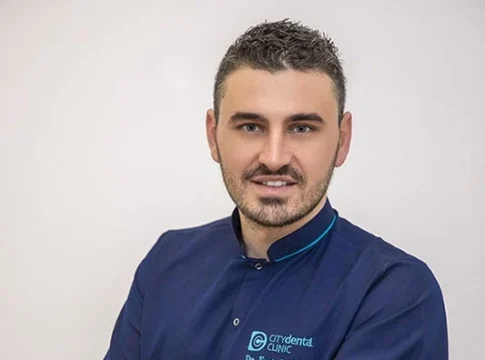
City Dental Clinic in Tirana publishes pterygoid implant treatment as part of its advanced implantology services. Its official profile for Dr. Ersted Muço documents oral and maxillofacial surgery training and a 2021 University of Pisa Master of Science focused on atrophic-jaw rehabilitation using nasal, pterygoid and zygomatic implantology.
Verify the proposed operating team, current credentials, implant system, anaesthesia arrangements, prosthetic materials, complete treatment schedule and long-term maintenance terms in your individual proposal.
Clinical references
- D’Amario and colleagues, 2024: systematic review and meta-analysis of implantology in the pterygoid region
- Bidra and colleagues, 2023: updated systematic review of pterygoid implants
- Araujo and colleagues, 2019: systematic review and meta-analysis of clinical outcomes
Clinic sources: City Dental Clinic pterygoid implant information and Dr. Ersted Muço’s official profile.
Request a treatment plan for a clinic-specific assessment and itemised proposal. A remote review does not confirm suitability, and treatment should not proceed without an in-person diagnosis and informed consent.