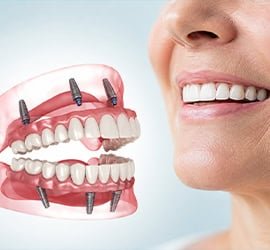

A dental bridge is a fixed restoration used to replace one or more missing teeth. It spans a gap and is supported by natural teeth, dental implants or, in selected designs, a bonded wing attached to a neighbouring tooth. The correct design depends on the size and position of the gap, the condition of the supporting teeth, the bite, gum health and available bone.
Types of dental bridges
Conventional tooth-supported bridge
One or more neighbouring teeth are prepared for crowns that support the replacement tooth. This may be appropriate when the supporting teeth already have large restorations or need crowns, but it requires removal of tooth structure and can affect the nerve of a supporting tooth.
Resin-bonded or adhesive bridge
A metal or ceramic wing is bonded to the back of a neighbouring tooth. This generally requires little or no preparation and may be considered for suitable shorter gaps, particularly near the front of the mouth. Debonding is a common complication, but it can sometimes be repaired by rebonding.
Cantilever bridge
The replacement tooth is supported from one side only. This design places different forces on the supporting tooth and is appropriate only in selected situations after bite assessment.
Implant-supported bridge
Two or more implants can support a bridge where several teeth are missing. This avoids preparing natural teeth but adds implant surgery, healing requirements and implant-specific risks. Bone grafting may be required in some patients.
Assessment before treatment
The dentist should examine the gap, supporting teeth, gums, bite and opposing teeth. Dental radiographs may be needed to assess roots, decay, existing fillings and supporting bone. The plan should consider whether the supporting teeth are strong enough, whether active gum disease or decay requires treatment, and whether a bridge is preferable to an implant, denture or leaving the space.
Typical treatment stages
- Diagnosis and options: compare bridge designs with implants, removable dentures and no replacement where appropriate.
- Supporting-tooth preparation: conventional bridges require reshaping of supporting teeth; adhesive designs generally require less preparation.
- Impression or scan: records are sent to a dental laboratory or used in an agreed digital workflow.
- Temporary restoration: a temporary bridge may protect prepared teeth while the final bridge is made.
- Try-in and fitting: the dentist checks the margins, contact points, bite, appearance and cleanability before final cementation or bonding.
- Review and maintenance: supporting teeth, implants, gums and the bridge require continuing professional checks and daily cleaning.
Bridge materials
Materials may include metal-ceramic, zirconia, other ceramics, metal alloys or combinations. Material selection depends on bridge length, available space, bite forces, supporting teeth or implants, appearance, laboratory design and the clinician’s assessment. Ask for the proposed material and laboratory specification in writing.
Risks and limitations
Possible problems include sensitivity, decay or gum disease around supporting teeth, nerve damage that later requires root canal treatment, fracture of a supporting tooth, debonding or loosening, porcelain or ceramic chipping, bite problems and difficulty cleaning beneath the replacement tooth. Implant-supported bridges also carry the surgical and maintenance risks associated with dental implants.
A bridge does not prevent future decay or gum disease and may require repair or replacement. Its prognosis depends on the supporting teeth or implants, design, bite, oral hygiene and continuing care.
Bridges compared with other options
- Dental implant: may avoid preparing neighbouring teeth but requires surgery, adequate bone and healing time.
- Removable denture: can replace several teeth without fixed preparation but must be removed for cleaning and may require adjustment.
- Leave the gap: may be reasonable when function and appearance are acceptable, although nearby teeth can move in some cases.
- Orthodontic space closure: may be possible for selected gaps after specialist assessment.
Planning bridge treatment in Albania
- Ask which bridge design is proposed and why it is preferable to the alternatives.
- Confirm exactly which natural teeth will be prepared.
- Request separate costs for assessment, imaging, temporary work, laboratory materials, implants if applicable and follow-up.
- Ask how many appointments and laboratory days are required.
- Confirm whether root canal treatment, core build-ups or treatment of gum disease could change the plan.
- Request copies of radiographs, material details and written aftercare instructions.
- Agree how debonding, fracture, bite problems or urgent pain will be managed after returning home.
Cleaning and maintenance
Brush twice daily with fluoride toothpaste and clean beneath the replacement tooth using the method recommended by the dentist or hygienist. Floss threaders, interdental brushes or water irrigation may be suggested depending on the design. Regular examinations and professional hygiene are needed to monitor the supporting teeth, gums and bridge.
Questions to ask the clinic
- What is the prognosis of each supporting tooth or implant?
- Would an adhesive bridge preserve more natural tooth structure?
- What material and connector design are proposed?
- Will a temporary bridge be provided?
- How should I clean beneath the bridge?
- What complications are included in the clinic’s repair or remake policy?
Clinical references
- Leeds Teaching Hospitals NHS Trust: Bridges
- NHS: Dental Treatments
- University Hospitals of North Midlands: General Restorative Dentistry
- American College of Prosthodontists: Implants, Bridges and Dentures
Verified clinic availability
City Dental Clinic lists conventional bridges in metal-ceramic, zirconia or palladium and fixed bridges supported by dental implants in its official general dentistry information. Its official fixed prosthesis information also describes traditional, cantilever, Maryland and implant-supported bridge designs. Availability and suitability must be confirmed individually.
This page provides general information and does not diagnose conditions or recommend a specific procedure. A licensed dentist must confirm the condition of supporting teeth, suitable alternatives, materials, risks, timing and costs.